I’d love to hear about your favorite concept or idea you’ve read about or seen in scifi media.
My personal favorite is the Conjoiner Drive out of the Revelation Space series. These ship drives are dual drives on either side of a lighthugger and have a living being inside the drives to act as a supercomputer, which holds a wormhole open inside the drives. The wormhole links far in the past to the big-bang and uses the energy from the big-bang for propulsion.
In most scifi I’ve come across wormholes are used for FTL travel, and I thought this was such a unique and creative use of a wormhole it has stuck with me for years after reading about it.
So what are your favorite devices or ideas that have come out of scifi media?
My current favorite topic is the idea of a world ark, a self-contained world adrift in space containing the remnants of life from a doomed world, and the inhabitants aren’t aware of it. Intetestingly it has been featured in two different games: SOMA and Genshin Impact. I’m currently working on a TTRPG campaign within such a world.
I’ve been thinking of an idea like this for a while. A bubble of stars and planets preserved from a dying universe, either doomed to drift the void for eternity or perhaps lucky enough to stumble into a new existence. Either way, I imagine people on worlds with a countable number of stars in the sky. Think of it as almost the same as a world arc, but on a local cluster scale instead of planetary.
I don’t know if this is the same or at least similar, but I’ve always been fascinated by the idea of a generation starship that is moving toward the universe either toward another planet, in search of another planet, or simply as an indefinitely mobile home. It’s wild to imagine generations being born and living on the starship without having any real understanding of the place that humans came from. Stories of Earth would start to seem like wild folklore and mythology rather than actual human history.
Eventually, some generations may become angry that the decision to live on this starship was made by other people many generations before them, and now everyone on the starship is cursed to live under that decision. Was the starship navigation designed so that people may one day change the course? Or perhaps enormous safeguards were put into place to ensure that the ship kept going toward the initial objective because all other options were decidedly much much worse for everyone.
Eventually, some generations may become angry that the decision to live on this starship was made by other people many generations before them, and now everyone on the starship is cursed to live under that decision.
In Genshin Impact, it’s not known by the vast population that the planet they’re on isn’t a normal world. But it’s expansive enough that I think most people wouldn’t have much opinion either way. It would be like telling you that you’re trapped on a chunk of rock suspended in space. Well, yeah and?
If you haven’t read his books, Stephen Baxter has at least a couple of good explorations of long journey ships.
I think my favourite is just when they play with the unknowable. Things so different from humans they operate on different principles and see the world differently.
Sure you see this in fantasy and horror a lot with like the house in House of Leaves or Cthulhu but I’m also thinking the TechnoCore and Shrike in Hyperion, maud’dib in Dune, or the black stuff in the Expanse series. I just like alien stuff that’s, well, alien
People permanently grafted into ships is pretty cool. That does come up a lot, doesn’t it?
IIRC there was something like that in Gene Roddenberry’s Andromeda. The FTL method in that series requires a sentient biological mind to navigate it. In “The Sum of Its Parts,” the crew encounters a race of artificial intelligence that has found a way around this problem…by simply taking the brains from sentient biological beings and basically using them as specialized processors for FTL calculations.
There were definitely a few other instances of that happening on accident but I think the conjoiner drives were the only ones that were on purpose.
Nah, Chronicles of Riddick has ship telepaths who live in pods. Battlestar Galactica has something similar. The video game Homeworld had galactic travel ships that were controlled by a human grafted to the computer, that turned out to he reversible and had lower stakes as time went on. That’s probably the closest thing because the ship controller is responsible for plotting hyperspace jumps by ripping holes in reality.
The navigators in Dune are almost like this but you can carry them offship in a giant fishtank. So not grafted but kind of non-ambulatory outside of spaceflight.
I guess the theme I latch on to here is people who trade their body and autonomy to gain interstellar flight and provide for others. Is it not the same with conjoiner drives?
My bad I thought you were talking about within the Revelation Space universe. Great examples of that trope in different media. Didn’t know that was a trope used in homeworld I didn’t pay much attention to the story when I played it ages ago
Warhammer 40k, more or less with cogitators and servitors - no automation is allowed after an AI uprising tens of thousands of years ago. All processing is done by lobotomized and heavily modified humans. Many of these cybernetics are built into ships.
Ork FTL ships are built around the brain of an ork ‘weirdboy’ or psyker (sometimes).
That’s RIGHT! I knew there would be something 40k related but I completely mind blanked the cogitators. Did the Mechanicus ever put one of those in charge of driving an entire ship?
I’m not too knowledgeable, but there are lots of edge cases. The machine spirits of the largest mechas (Titans) are known to have some autonomy and individual personalities, which is to say, they probably have some illicit AI or a less disabled human consciousness (-es) at their core.
Anne McCaffrey’s The Ship Who Sang has children with severe physical disabilities given new lives, bodies, and possibilities as ‘shell people’ - brains grafted into ships. An amazing new view on what it is to be human.
There’s lots of ship-who-something books written all or in part by Anne McCaffery, they’re all pretty good. I enjoyed City who Fought, also.
Something like it comes up somewhere in Scalzi’s Old Mans War series. One of the later books, I think. That’s from aliens giving a human “brain in a jar” treatment, though – not sure if it quite counts as being grafted into the ship.
You know I’d say that’s pretty close. I forgot I should read those, somebody recommended that to me for liking Enders Game
I loved Ender’s Game when I read it as a kid. The followup trilogy was also intriguing, but I kind of lost interest during the 'Shadow series. Maybe around 2002?
Looking again now…wow, the author really expanded the setting! I had no idea he’d added even half this much.
In Christopher Paolini’s book To Sleep in a Sea of Stars there are people whose brains have been removed and installed as ship minds to augment ship functions. There’s some discussion about what it cost and whether it was worth it.
The Uplift Series is a gem. Copied directly from Wiki because it’s succinct yet thorough:
The Five Galaxies are filled with alien races, all of whom were “uplifted” into sentience by another race through the use of directed breeding. As “payment” for being made sentient, the uplifted races are subservient to their uplifters for a period of time. All existing races have reached sentience through this process, and follow a common evolution in which the races become free of their uplifters, enter a period of independent power, and then fade and eventually disappear.
The arrival of a human ship at a populated star upsets the established races as humanity reached sentience on their own. This had been believed to be impossible, nothing of the sort is known in the eons-old galactic library. This leads to great arguments among the alien powers. Humanity begins to uplift other species on Earth, including chimpanzees and dolphins, but does not demand subservience.
Besides the whole uplift concept, I’ve also liked the concept that the galactic civilization is really old - like hundreds of millions if not billions of years old. Some of the ships flying around are tens of millions of years old.
I have to say the second and third books, Startide Rising and The Uplift War, are some of my favorite sci-fi novels of all time. The first book is David Brin’s first novel and it kind of shows. It’s not a bad book, but it’s a bit weak. The last three books are a trilogy and they start getting pretty weird and I didn’t care for it as much. The second and third books are standalone so you can read them without the first book very easily. I actually had read the second and third books a few times before looking into it a bit more and realizing there was a first book.
sounds interesting !
but does not demand subserviencethat’s the fictional part right there I guess :)
This is a bit of a general one, but I have a fondness for very large space structures. A number of my favorite scifi stories take the premise of “exploring a (usually abandoned or tech-regressed) alien megastructure”.
Dyson spheres and ringworlds and stellar engines and the like are the obvious candidates, but honestly I like smaller (but still huge) ideas like oneill cylinder colonies just as much, because what I like in them is a function of both size and how close to understood physics they follow, and the latter tend to be easier to make plausible.
There’s a certain sense of inspiration that comes of someone describing something almost incomprehensibly huge, explaining that it is designed by intelligent entities, and then justifying it with enough real science as to convince you that something at least somewhat like it really could exist, someday, or maybe already does somewhere out in the vastness of the universe.
Im with you i love a good megastructure. I know the bobiverse books are a bit cheesy but I really enjoyed the oneill cylinder world that was the main focus of book 4 I think it was. Pushing Ice, Ringworld, and Rendezvous with Rama were all good as well. Got any other good superstructure stories I could get into?
You named virtually all of the ones I’d mention first lol. I guess I’d probably add “bowl of heaven” to that, I’m not sure it’s design is the most plausible form for the concept really but it features a stellar engine (specifically, one using the star as a sort of rocket thruster, to move something like a ringworld around).
Just give me neon lights in the rain and I’m already happy.
I’m boring and I really like rotating megastructures. I think what I find fascinating is they’re feasible for us to make IRL if we somehow figure out refining on the moon and mass drivers (ignoring the economics too lol) since they use conventional materials even for relatively large ones.
Everyone is always focused on terraforming or colonizing distant planets. A rotating habitat is engineered to be exactly what we need better than any planet we can colonize.
Life on Mars would be demonstrably worse. You need to bury your habs under meters of regolith to not kill your colonists from radiation. Going outside is a space walk with a laundry list of items you need to attend to with little to no time to enjoy being outdoors (you’re in a suit regardless which means it sucks to some extent no matter what)
A rotating Hab means you can live much closer to how you live on Earth
I love the dying earth trope. Its earth, but millions if not billions of years after present day. I love thinking about what the humanity of today might leave to be discovered by whatever comes next. I think the first real exposure I had to it in media was that Artificial Intelligence movie from 2001. Its been around in fiction a lot longer, but that was the first time I really “got” it. Its so neat to me to think about how an alien (or a distantly removed human) might interpret the present day.
The wormhole network of the Nasqueron Dwellers in “The Algebraist.”
Niling d-sinks, from Peter F Hamilton’s Commonwealth novels.
The Planet Express ship from Futurama (it would take too much energy to move the ship at FTL, so it moves the universe instead.)
Planet express ship is cool and all but I think the finglonger takes the cake
Anne Leckie’s Translators. Aliens so alien that the only way we can have any shred of common ground is by them taking a few humans and rebuilding them specifically to be their ambassadors, with interesting results.
Okay, but that human translator thing sounds like something similar to what we see in a single episode of Sliders when we are introduced to the Kromagg. Except the one human translator you see is still seen as an inferior being.
Would have been a cool plot point had they not completely dropped it in season 4.
It’s hard to describe if you haven’t read it without just spoiling the books, it’s a fantastic bit of writing, and very integral to the story
highly recommending this series as well. the ships soldiers are pretty interesting as well
Is this from Translation State? That’s what came up when I searched Anne leckie translators, but sounds like something I’d enjoy.
Have you read Embassytown? It has some funky linguistics going on that sounds like it might be up your alley
A Translator appears in Ancillary Sword, and it’s pretty much “try to simulate a human” silly stuff for comic relief.
Translation State is a standalone book in her Imperial Radch universe, which includes the Ancillary Justice trilogy, which is a great series. I highly recommend it.
It’s a theme that runs through the Ancillary series, and is further expounded on in Translation State. I like the latter, but the way she writes them in the series is something else, it’s an incredibly imaginative and funny piece of writing. I love those three books, I think they’re amongst the best sci-fi ever committed to paper.
I haven’t read it, but I will now I reckon, thanks for the recommendation
I don’t recall which book. But there was one with truth in advertising laws. I feel like it was Larry Niven. Anyway, the laws were the result of improved sucsess rates for organ transplants. It’s really only a side point, but I loved how they were connected.
Speaking of Alastair Reynolds, concept of Pattern Jugglers - benign algae-like pools that oscillate in strange image-like patterns and can physically connect, read, and modify human brains. A person entering the Pattern Juggler could experience someone else’s life, temporarily gain skills or knowledge, or… die.
In Ursula LeGuin’s Left Hand Of Darkness, I love the idea of society without war. There is still violence and murder, but fighting on someone else’s behalf must be viewed as incredibly absurd and unacceptable.
Department Of Truth comics are based around the idea “what if what we believe becomes true?”. So cryptids, UFOs, and conspiracies exist because enough people believe in them.
The depth and mechanics of Orogenes in N.K. Jemisin’s Fifth Season / Broken Earth. It’s not just “I cast frost”, it’s heat and energy manipulation, with sense, direction, and geometry.
To Be Hero X (2025) is an anime with a similar concept to department of truth and was done really well. Peoples Trust (and fear) in someone can grant people powers according to their followers faith/desires.
Wormholes always kinda rubbed me wrong in sci-fi. They’re always depicted in a way that screams fantasy, not science, with only one exception that comes to mind, which was Interstellar’s depiction of a wormhole as a sphere, even taking the time to explain why it looks that way.
The only got it half right though, since as soon as they enter the sphere it’s straight back to the fantasy BS with the blue tunnel. That scene could have been a really cool transition of entering the one ‘side’ of the sphere while exiting the other simultaneously. Cut from the crew’s perspective seeing lens-like distortion of the stars, to an external view of the ship moving into the sphere.
I kinda feel like that’s how they intended to do that scene, with the whole buildup about the sphere, but decided to throw a nod to oldschool science fantasy for some reason.
Oh well. They got it half right, and that half was pretty fucking sick - it was the first presentation of a wormhole that didn’t instantly yoink me out of suspension of disbelief. Until the blue tunnel ofc, at which point, yoink.
To answer OP’s question, I guess for me it’s less a specific concept as it is presenting something possible only in theory in a believable way. The whole lens-distortion style transition would have been way less flashy, but less can be more.
I’ve always thought of scifi being very adjacent to fantasy.
Dune, star wars are basically fantasy stories packaged with scifi elements.
I’ve always wondered what makes a SciFi story SciFi and I’ve come to the conclusion that for it to be SciFi it must be an exploration of how technology effects the human condition.
What do you think?
Definitely adjacent. The distinction as I understand it basically boils down whether or not there’s magic.
Like Star Wars has a lot of sci fi elements, but then space wizards who use ‘the force’ which is just space magic. Fantasy.
Dune I’m less familiar with - never read the books. Saw the first movie but was kinda distracted and never have it my full attention. Main character definitely showed some magic super power stuff, but idr much outside of that.
Most of them kinda toggle back and forth, like Interstellar is mostly sci-fi with a sprinkling of fantasy up until the black hole scene, then it’s mostly fantasy with a sprinkling of science.
Or there’s Star Trek, which of mostly grounded in actual science and theory, but it’s got a sprinkle of space magic here and there too.
Not many purebreds.
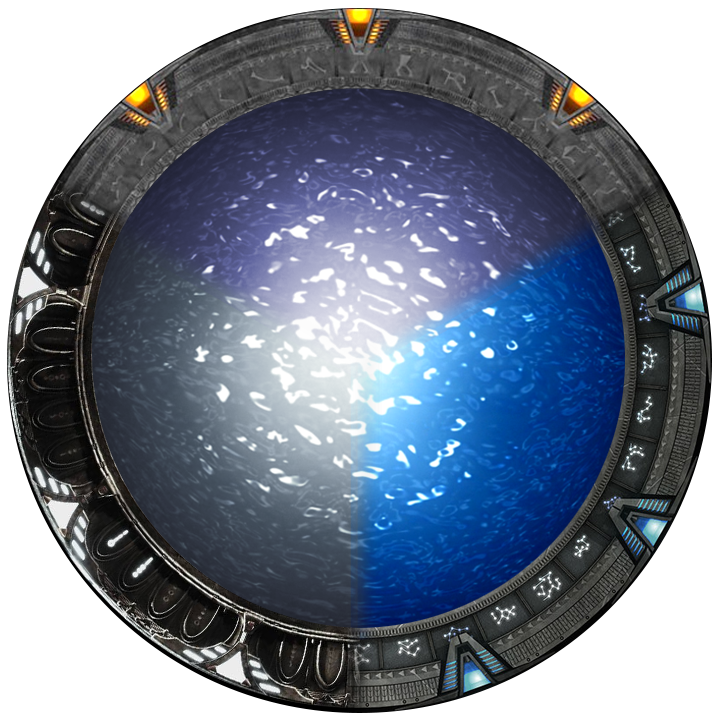
Now this has me thinking about the wormholes in Stargate. I never quite understood why the wormhole had a shakey “going down a waterslide at a theme park, but in space” vibe.
Because it looks cool
It’s round. It has to spin!
I love science and technology vs. the supernatural. I think it started with Ghostbusters when I was a kid.
Any time any movie or TV show attempts to battle the supernatural with technology I am glued to the screen. Anything from movies like Oculus where you try to confront an ancient evil with real-life modern tech to inverse movies like Event Horizon where oops…my future tech unleashed evil.
I can’t remember what book it came from, maybe one of Peter F. Hamiltons, but portals was a thing. So naturally the superrich had houses where rooms were not on the same planet. The doors between the rooms looked normal, but was portals to the next room somewhere else.
Especially the toilet tickled me. That was situated on an open raft on a deserted ocean covered planet.
I’m sure I’ve read this book, but I have no clue about the title, the author, or anything else in the plot :(
Great North Road, Peter F Hamilton I think. Also Hyperion by Dan Simmons.
Martin Silenus’s house in Hyperion
You are thinking of Pandora’s Star
Hyperion, probably.
This is indeed Hyperion by Dan Simmons. Hamilton had really cool use of portals in the Salvation series, though. Among other things, they could:
- Make people travel (and indeed have distributed houses as well),
- Source of free energy by placing one end of the portal close to the sun,
- Solution for garbage by placing one end of the portal into outer space,
- Geoengineering, for example, by placing one end of the portal above the Australian desert, and feeding it icebergs from the other end.
My favourite use was a protagonist placing one end of a portal on Earth, and smuggling the other onto a penal colony to rescue a prisoner.
For me the wildest aspect of the Hyperion portals was that there was essentially only one portal. Hyperdimensional godlike artificial super-intelligences swept the portal across each doorway like some sort of cosmic lighthouse, mimicking the theory that there only exists a single electron in the universe that travels backwards and forwards in time to be every electron for everything everywhere all and once. Also, those articlfical intelligences shared their environs with other older beings referred to as “Lions and tigers and bears.”