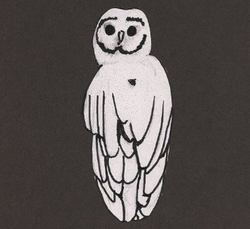

You don’t divide by 0 in Chinese because he’ll jump off the page and kick your ass.
Three pigs
Two pigs
One pig
Zero pig ? Or zero pigs?
Honest question. Do we pluralize nouns of zero count? Or should they be singular?
It’s plural, but not because there are many pigs.
“How many pigs are there?” And answering with “There are no pigs” use the noun “pigs” in the same way. They are referring to the “pig” category or kind. When answering knowing the actual count, it’s a specific number or token.
“are” makes it plural
if the sentence had “is” instead, it would be singular: there is no pig
But they are asking with the number zero specifically. “There is zero pig” is not how we speak.
good point. “there is zero [noun]” doesn’t work whether the noun is plural or not. only when you use “no” instead of “zero”
i’ve only ever spoken english and it still confounds me. why do we say “hands” but we don’t say “foots”?
why don’t “good” and “food” rhyme?
why does “feed” become “fed,” but “weed” becomes “weeded”? meanwhile “wed” and “wedded” mean the same thing
lol
“How many pigs are there?” And answering with “There are no pigs” use the noun “pigs” in the same way. They are referring to the “pig” category or kind. When answering knowing the actual count, it’s a specific number or token.
There are one pigs
there is one pig.
to be singular is the only non-plural state
In English you use plural for zero count. I have zero pigs. There are 0 cows.
Binary calculations must be a nightmare for some
Sure, when you mean “zero” it may look a bit excessive. But it’s quite adequate if you want to express “Void, the Dark Realm of Nothingness and End of All Things”.
ps: Glory to ZA̡͊͠͝LGΌ.
What about this one?

Is this Garfield Breast Reduction?
I’m at a loss for words
How many gears is that?
11? Including reverse
All of them.
Just enough to make the Kessel Run in less than twelve parsecs.
Listen here you little shit
Listen here you little dope /*6 yo me confused face
-1
I’m at a loss
e:f;b
That’s the map of the forth level of the dungeon in “Vampires for Hire”.
<s>:.|:;</s>
~~strikethrough~~-->strikethroughWasn’t working on my client which is why I did it the way I did ¯\_(ツ)_/¯
Oh, really? That’s odd. What client?
It was Boost, but I just got an update the other day and now it’s working so nevermind lol
The concept of zero is scary, so it’s a wizard shooting lightning from all orifices. Makes sense.
Under the arms and from the butt are the orifices?
armpitussy
This got weird SO fast.
I was thinking it was so scary, it’s someone pissing themself
The Greeks felt the same - thankfully Eastern philosophy had a different take on it.
I thought it was a ghost
零 isn’t too bad as far as chinese characters are concerned. you should see the character for depression. or the biang biang noodles character, although that one is kind of a meme
I’m partial to the Japanese-invented 𱁬
Here’s in image in case it doesn’t show up

Though it’s pretty simple once you see it’s just 2 kanji repeated 3 times. There’s also a good one that is 4 龍 in a 2 by 2 grid, meaning “verbose” (haha)
“It’s complicated”
write all of the numbers on top of each other then scribble on them. does that look anything like zero? i don’t know kanji, i’m just understanding my own bad handwriting and trying to understand how they’d get there
nope, doesn’t come from that
 here’s the kanji breakdown according to kakimashou.com (note that kanji is stolen from Chinese)
No one has mentioned special 2, 两! It’s only for counting certain things.
Two guys carrying a table?
What about accounting numbers? They’ll make anyone cry
I mean… in English we also use different words, such as “pair” and “dozen”, for some specific numbers.
But those are just words for “a group of a special size”
Some eastern languages have totally different counting words depending on WHAT you’re counting. One set of number-words for flat things, another set for long things, another set for printed/bound things, another set for things with handles…
that’s because the english language numbers are based off of base 12, not base 10
Lil fella with smelly armpits and the buttsquirts?
Fun fact, for a long time in history minus (-1) did not exist
Zero is also a relatively new invention
How about -2?
Mathematics for much of human history was discrete - it had to be connected to something tangible which you can see, touch or feel. Negative numbers first arose in China, subsequently the use numerical operations on negative numbers and the conceptualization and use of zero arose in India. Spiritual concepts within dharmic philosophies such as Buddhism helped lead to these ideas.
In the history of mathematics, -1 was understood waaaay before 0.
For the Greeks, doing 1-1 would be invalid, something close to dividing by zero for us.
Dividing by zero is well understood and sometimes even well defined.
That’s a stretch.
We know the limit of it and on a Riemann sphere it is defined as infinity.
We know the limit of a/x as x --> 0 if a ≠ 0.
The limit is different if a = 0.
The limit of the division function under certain conditions is not the same as division - division has a discontinuity at 0 which is expressing the same thing.
Defining division by zero only works if you don’t care to preserve the field axioms, which is often inconvenient and so not done. The Riemann sphere is not a field, and fairly niche in the context of mere division, so I stand by my accusation of this being misleading.
The policy of not defining division by zero to preserve the cancellation law is the most sensible default.
Fun fact, for the greeks, 1 is not a number either - they said the natural numbers started at 2 and unity is something else. This is because, they said, all numbers represent pluralities.
I saw a video years ago where somebody was talking (with a translator) to a tribe, I forget where. He asked how do they count. They would point with one hand to the other hand. Once they’ve got to five they start pointing to other parts of the arm moving upwards. He then asked what if you need to count higher. They looked confused, why would they need to count higher.
For them they could exist without needing to count beyond teens.
I’m not sure how accurate that is, calenders are pretty important for being able to survive, and surely they need to figure “do we have enough food to last the rest of this season”.
Maybe they have different math for that or there was an issue with translation.
Yeah líng 零 is pretty annoying as a learner of the language.
The top character is yŭ 雨 which means rain.
The bottom character líng 令 means order/command as a noun and verb. This doesn’t add meaning, it is the phonetic component: basically a pronunciation cue.
It originally meant “light rain”/“falling in drops, like rain”, actually. It began being used to mean “fragments” or “leftover part”, then as “remainder” in the mathematical sense. Then, eventually, to mean 0. Another form of this character is 霝 which means raindrops. It has 3 kŏu 口 (“mouth”) characters on the bottom to visually represent drops.
So, like a lot of Chinese characters, it really only makes sense when you understand the etymology - and even then it’s kind of a stretch
In OPs post, I see a stick figure guy pooping. Jack shit. Zero
Yeah it’s a visual metaphor - the emptiness of his bowels = the concept of zero shit in bowels

The fact that such intricate characters can even be displayed in such tiny fonts is nothing short of obscene lol, I wonder if chinese phones all have that Assistive / Readability Mode where the text is enlarged and high contrast by default, because I can’t imagine reading texts like that haha
As someone who’s learned Japanese a bunch: once you’re very familiar with the symbols, you don’t look at every little line to determine what character it is, just the general shape. The characters are built by combining a discrete and smaller set of “drawings” (called radicals). So the space of possible characters is limited to those combinations. On top of that, not every legal combination actually exists. You won’t suddenly run into 鬱, but with a different radical in the bottom left, unless you’re playing a trivia game of “spot the mistake” (which can even be difficult for native speakers, just in the same way it can be difficult for native English speakers to spell some words they’d have no trouble reading.)
I would wager some misplaced lines wouldn’t hurt readabiliity much in the same way we, in English aren’t usually struggling to read a sentence even if some of the letters are swapped/missing or a “the” is duplicated, etc. I’m sure you’ve seen examples of that before in English (or your own native language if it isn’t English).
Of course in some instances, even a tiny difference can change the meaning of a sentence entirely. This is also true both in English and logographic languages. Luckily our brains do a lot of subconscious work here too and figure out where special attention is and isn’t needed by using context and knowledge about the writing system.
(Small caveat: of course, especially in languages, there are always exceptions to every rule. And also the brain can be tricked, intentionally or not, in a variety of ways.)
https://bookshop.org/p/books/zero-the-biography-of-a-dangerous-idea-charles-seife/9b102f8407965163
Really good read.
Zero The Biography of a Dangerous Idea.
So basically = 0 and the long = Null?
No
= is 2