

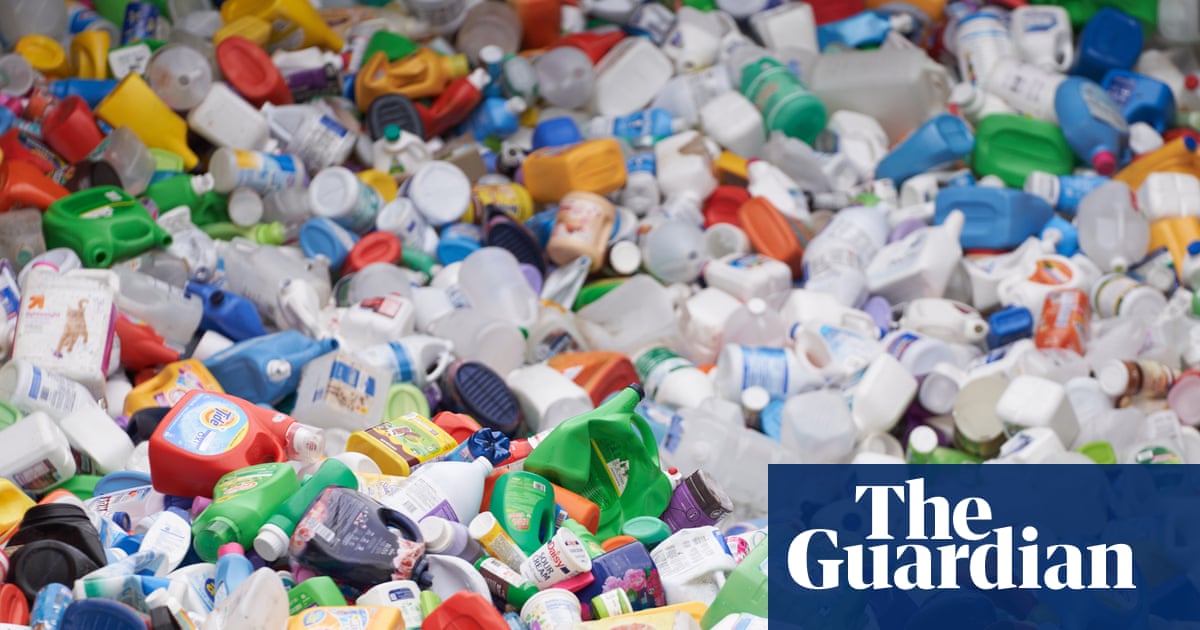
A groundbreaking California law that compels packaging producers to phase out single-use plastics is already sparking anger from the chemicals industry and environmental groups just weeks after going into effect.
The law, which was signed by Governor Gavin Newsom in 2022 but only took effect in May, requires plastic and packaging companies to use less single-use plastic, and ensure by 2032 that all packaging is either recyclable or compostable. The big idea is to incentivize producers of plastics to consider the end of their products’ life in order to create better, more sustainable bottles, containers and wrappings.
Under the new rules, plastic producers have to cut single-use plastic, increase recycling rates, and pay $5bn to remedy harms from plastic pollution.
This seems short-sighted. Industry groups should be able to make their case to legislators. For example, if a small town has a paper mill that smells bad, the town might consider legislating that the mill implement technology to remove the smell. The mill, then, should be able to inform the town that this technology would be prohibitively expensive, and would cause the mill to close down and for most of the town to lose their jobs. From there, the town might request proof of this statement in the form of financial documentation and implementation bids, and if the statement is found to be true, they could work to find a solution that maximizes resident quality of life while not significantly harming the town’s economy. And this negotiation would still need to happen even if the mill is a worker-owned cooperative, or government-owned.
The problem is the influence that industries have over legislators via campaign financing, political connections, roundabout bribery, etc.
Another part of the problem is that the industries employ experts in their industry, while the government does not have experts in any industry, so they can baffle them with technical language and misleading figures.
The government should employ experts to analyze the statements industry makes.
But that’s literally socialism.
Employing independent experts to help legislators make descions is not socialism. It’s a common sense governmental policy that goes back to antiquity. See: kings having advisors.
But… that costs money!!
So does naively shutting down your towns paper mill and destroying the town economy, or failing to improve the town’s quality of life and driving away productive residents or prospective residents.
Your system assumes industry will act in good faith, which we have repeatedly seen is not the case.
My example was simplified for the sake of illustration. But even in my simplified model, I did say
Industry is allowed to make their case, but the government should not naively trust them. They should demand proof, and have that proof analyzed with their own independent experts.
Yeah I think another part of how we ended up with things working the way they do is that our legislators don’t actually know anything about what they’re legislating and “expert voices” seem like they get monopolized by corporate interests
It feels a bit like we built a system to see who is most electable, not who is likely to be most capable once elected, and so winning politicians are often ones who index all their knowledge and abilities into interpersonal skills and have none left over to legislate with.
I don’t know what it would take to reliably have real experts that don’t have a conflict of interest helping shape our laws and regulations but if we found a way to accomplish that it would be a big step in the right direction. Though it would do nothing about politicians acting in bad faith and pursuing corporate interests because its advantageous to their position of power to be buddy buddy with powerful wealthy entities. You’d obviously also have to get corporate money out of politics for it to do any good.