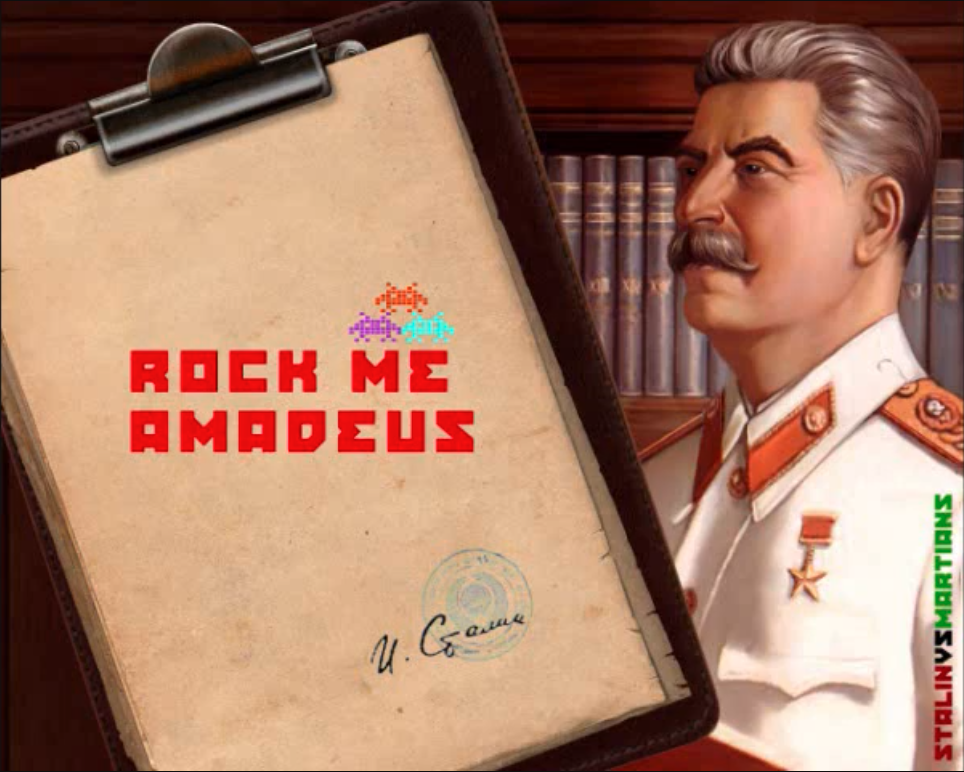
I am a bit of a newer communist, albeit I’ve read my fair bit of theory. I like to think of myself as still quite radical and do identify as a Marxist-Leninist. My radicalization as a whole took about six months to through the ideology gauntlet socdem for months - > like two weeks of western anti-authoritarian socialism - > critical support to state capitalist China - > staunchly pro-AES Marxist-Leninist, who actually read a god damn book for once. To go from liberalism to socdem took years, and maybe this is what causes friction with my perspective on Great Man Theory vs historical materialism.
Obviously historical materialism is the correct way to define nature, as it is the only system that is able to accurately explain historical events and even predict modern ones when applied correctly. Men alone do not push history forwards, history would move along without them. ‘Great Men,’ so to speak, are products of their material conditions at their point in history. This all makes sense to me, however I find issues rationalizing how exactly great man theory is completely eliminated.
For example the material conditions in the WWII Soviet Union were those of a constant state of war that necessitated industrialization. It is commonly said, even by Molotov himself, that Stalin was aware of the threat that Nazi Germany posed to the Soviet people, and thus called on the Soviets to industrialize. I’m sure the reality is not as cleanly cut as ‘this was all Stalin’s idea’ but nonetheless, industrialization saved the Soviet Union later down the line. My question, I suppose being, that if Stalin had never became the Secretary-General for whatever reason, would the material conditions necessitate whoever was the lead the Union in his stead do the same? What if that leader did not see the Germans as such an existential threat?
For whatever reason, after putting my question to figurative paper, I find myself unsatisfied with the articulation of it, so allow me to give another, more generalized example:
Are revolutions themselves not somewhat examples of this? Had revolutionary organizations not been filled with the leaders they did have, would their revolutions have won? Even if they did win, would the systems not look at least somewhat different on account of being led by different people? How much does this effect the arc of history? If Deng was never part of the CPC, does China collapse due to not opening up its markets? If Lenin never made it to become the firebrand revolutionary leader that he was, does the Russian revolution look completely different? Are the Bolsheviks as well organized or do they kowtow to the Mensheviks? Many principled Bolshevik leaders at the time almost did.
We can even extend this idea beyond that of revolutions and politics. If Alan Turing is never born, how much longer does it take us to invent modern computers? What about if Charles Babbage never builds the analytical engine? If those oil CEOs never silence the early studies on climate change? How much does this effect the flow of history?
If we are to say that nothing changes, that these systems still rise and fall the exact way that they did in our past, why does this make great leaders like Kim Il Sung, Lenin, Stalin, Deng, and Mao even important in the arc of history? Why should we even celebrate their achievements or contribute certain ideas to them if it was all really other people or other things? Could we not say then that the USSR’s collapse was set in stone the moment it was formed?
This can also work the opposite way. If Zelenskyy, and essentially every other political leader are truly powerless to stop the crimes against humanity in Ukraine in the face of materialism, who is responsible for them? Was the Holocaust inevitable? Was every genocide to ever occur inevitable? Is there no detectable pattern to tell us if these things are set in stone before they happen? Has history already been decided? It seems ridiculous to me, so I imagine it must be my own failings in applying theory.
In closing I suppose I could boil my question down to: do decisions that have cascading effects made by historically important figures present as an example of great man theory, or am I misunderstanding what great man theory is in comparison to historical materialism? Excuse my potentially awful application of theory here, it’s been a definite blind spot for me and I would like to hear more about it. Thank you.
I think you are missing what great man theory is. Great Man theory is for people who memorize history factoids. If you want to really understand history you have to look at conditions and contradictions. The individuals involved are secondary.
Great man theory posits that History is pushed forward by Great Men. Its an ontological error. It says there individuals who are just “great” and their actions no matter what they are, are destined to change the world. The bulk of humanity are just NPCs and the Great Men are the Player Characters. Its Nietzschen idealistic slop founded in hyper-individualism and supremacist thinking. Its incredibly prevalent in western media and video games put this type of thinking on blast.
As Marxists we understand that history is what makes people great. Had any “great” person not done what they did they would not be great. Had any other person done it instead they would be the Great Ones we remember. Material conditions drive history forward but there is often a single person or small group of people who are instrumental in driving a quantitative change that leads to a qualitative change. Those individuals are preserved in history because it is easier to remember the name of a man than it is to understand all the events that lead up to a massive change. Other people might have easily filled their roll and history could have rolled on much the same way with out them, or not, We won’t ever know because that didn’t happen.

(Where did you learn this from, as in specifically what book of the theory catalogue?)
I couldn’t really put it down to a specific source its kinda just an amalgamation of the various Marxist critiques of great man theory I have come across and my own materialist analysis.
Thomas Carlyle’s, On Heroes, Hero-Worship, & the Heroic in History is the definitive work promoting Great Man theory. I suppose that would be a good place if you wanted to do an in depth debunking.
A leader is able to come to power and allow to make a decision because that system of political economy allows for it. Thereby we don’t minimise the agency of the indvidual nor atomise how that agency came to be and how that agency can enact their power.